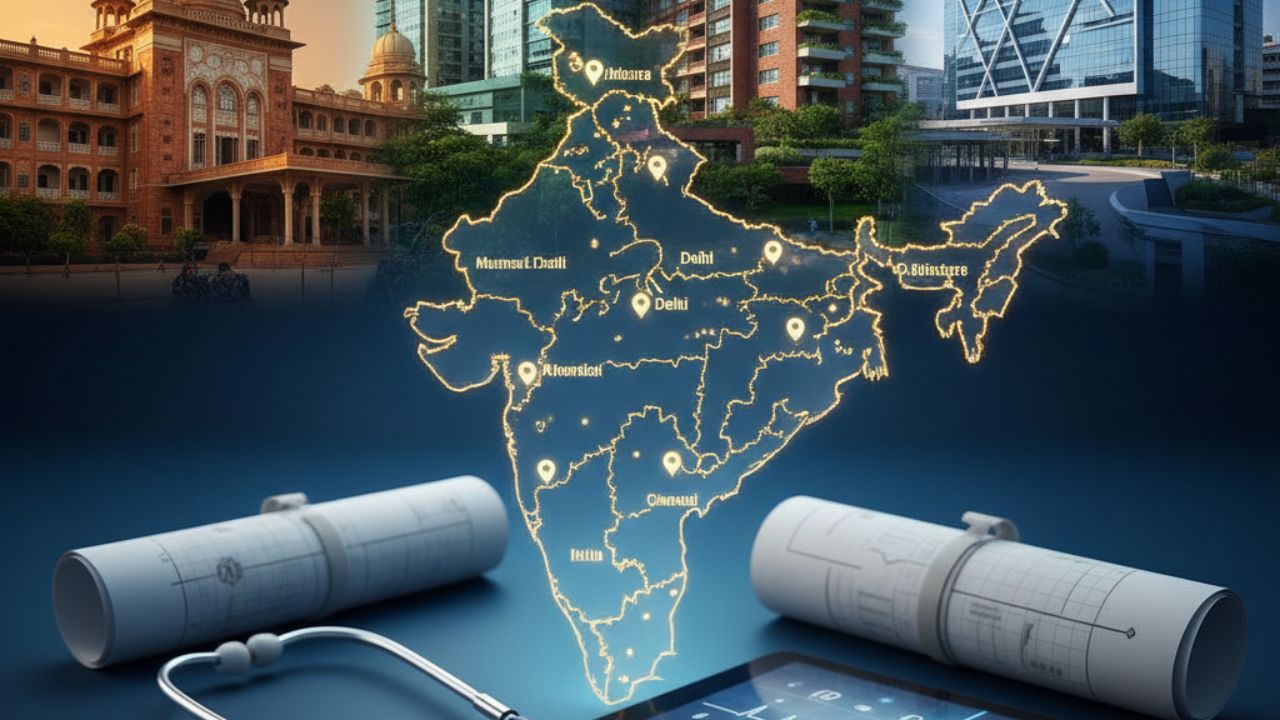
India has rapidly emerged as a global powerhouse in the medical field. No longer just a destination for spiritual retreats or cultural tourism, the nation now attracts patients from across the globe seeking world-class medical treatment at a fraction of Western costs. The healthcare landscape in India is a fascinating mix of government-funded giants and private sector behemoths, all striving to push the boundaries of medical science.
Navigating this vast ecosystem can be daunting. With thousands of healthcare facilities ranging from small clinics to massive multi-specialty cities, how do you determine where to trust your health? Whether you are a local resident looking for the best specialist or an international patient considering medical tourism, understanding the nuances of India’s top institutions is crucial. Quality healthcare is not just about state-of-the-art machinery; it is about the expertise of the doctors, the efficiency of the nursing staff, and the holistic experience of the patient.
This guide dives deep into five of India’s premier medical institutions. We will explore their history, their specialties, and what sets them apart in a crowded marketplace. From the research-driven halls of AIIMS to the corporate excellence of Apollo and Fortis, we will help you understand the strengths of each facility so you can make an informed decision for yourself or your loved ones.
The Landscape of Indian Healthcare
The Indian healthcare system is a dual-structured entity. On one hand, you have the public healthcare system, funded and run by the government, which aims to provide affordable care to the masses. On the other, a robust private sector has exploded in growth over the last three decades, offering luxury amenities, cutting-edge technology, and rapid service delivery.
The Importance of Quality Healthcare
In a country with a population exceeding 1.4 billion, the demand for quality healthcare is insatiable. The rise of non-communicable diseases like diabetes, cardiovascular issues, and cancer has necessitated a shift from basic primary care to advanced tertiary and quaternary care facilities. Top-tier hospitals in India are now equipped with robotic surgery units, advanced oncology centers, and organ transplant wings that rival the best in the world.
Factors to Consider When Choosing a Hospital
Selecting the right hospital goes beyond looking at a ranking list. Here are key factors to keep in mind:
- Accreditation: Look for NABH (National Accreditation Board for Hospitals & Healthcare Providers) and JCI (Joint Commission International) accreditations. These certify that the hospital meets rigorous safety and quality standards.
- Doctor Expertise: The reputation of specific consultants often outweighs the brand of the hospital.
- Infrastructure: Does the hospital have modern ICUs, modular operation theaters, and advanced diagnostic labs?
- Location and Accessibility: For long-term treatments, proximity to airports or accommodation is vital.
- Cost Transparency: Private healthcare in India varies significantly in price. Clear billing practices are essential.
Top Hospitals in India: A Detailed Look
Let’s examine five institutions that consistently rank at the pinnacle of Indian healthcare.
AIIMS (All India Institute of Medical Sciences), New Delhi
Established in 1956, AIIMS New Delhi is the undisputed flagship of public healthcare in India. Created by an Act of Parliament to serve as a nucleus for nurturing excellence in all aspects of health care, it remains the gold standard for medical research and education in the country.
- Infrastructure and Scope: AIIMS is massive. It is not just a hospital but a medical university and research center. It treats millions of patients annually, many of whom travel from the remotest corners of India.
- Specialties: It is renowned for almost every specialty, particularly Cardiology, Neurology, and Oncology. The sheer volume of complex cases handled here gives its doctors unparalleled experience.
- Achievements: AIIMS has pioneered numerous surgeries in India, including the first successful cardiac transplant. Its research output is prolific, contributing significantly to global medical literature.
Christian Medical College (CMC), Vellore
Located in Tamil Nadu, CMC Vellore is a private, minority-run educational and research institute that has earned a legendary reputation for compassionate care. Founded in 1900 by Dr. Ida Scudder, it started as a one-bed clinic and has grown into a healthcare giant.
- Key Specialties: CMC is world-famous for Hematology, offering one of the best bone marrow transplant programs in the country. It is also a leader in Gastroenterology and Rehabilitation.
- Infrastructure: While it may not have the glitzy glass facades of corporate hospitals, its facilities are world-class. It focuses heavily on community health and low-cost care without compromising quality.
- Achievements: CMC performed the first open-heart surgery in India in 1961 and the first kidney transplant in 1971. Its ethos of service over profit makes it unique in the top tier.
Apollo Hospitals, Chennai
The Apollo Hospitals Group is largely credited with sparking the corporate healthcare revolution in India. Established by Dr. Prathap C. Reddy in 1983, the Chennai flagship is the cornerstone of a network that spans the continent.
- Infrastructure: Apollo Chennai is designed to cater to international standards. It was the first hospital in India to receive ISO 9001 certification. It boasts dedicated wings for international patients, complete with translators and concierge services.
- Specialties: It is a powerhouse in Cardiology and Cardiothoracic surgery. The Apollo Heart Institutes are among the largest cardiovascular groups globally. They also excel in Oncology (Proton Therapy) and Organ Transplants.
- Achievements: Apollo has touched over 150 million lives. They are pioneers in telemedicine and have successfully performed thousands of liver and kidney transplants with high success rates.
Fortis Healthcare
Fortis is another major player in the private sector, known for its chain of hospitals across India. Their flagship facilities, such as the Fortis Memorial Research Institute (FMRI) in Gurugram, are often described as “medical destinations.”
- Infrastructure: FMRI is known for its luxurious ambiance, often compared to a hotel, which is designed to reduce patient anxiety. Beyond aesthetics, it houses some of the most advanced technology, including state-of-the-art radiation therapy machines.
- Specialties: Fortis has carved a niche in Orthopedics and Joint Replacement, Cardiac Sciences, and Neurosciences. They are also highly regarded for their Renal Sciences department.
- Achievements: Fortis hospitals are frequently recognized for patient safety protocols and have won awards for operational excellence in healthcare delivery.
Max Healthcare
Max Healthcare operates a network of hospitals primarily in North India. Max Super Speciality Hospital in Saket, New Delhi, is their premier facility and is often cited as one of the best in the capital region.
- Infrastructure: Max focuses heavily on specialized clinics. They have dedicated towers for cancer care, cardiac sciences, and neurosciences. Their facilities are JCI accredited, ensuring global standards of care.
- Specialties: They are leaders in Aesthetic and Reconstructive Surgery, Cancer Care, and Cardiac Surgery. Their “Max Institute of Cancer Care” uses a disease management group (DMG) approach, where experts from different disciplines collaborate on a single case.
- Achievements: Max Healthcare is known for introducing cutting-edge technology to North India, such as TrueBeam STx for cancer treatment and advanced robotic surgery systems.
Comparative Analysis: Public vs. Private Giants
Choosing between these titans involves weighing several trade-offs.
Infrastructure and Comfort:
The private players—Apollo, Fortis, and Max—win on patient comfort. Their rooms are private, the waiting times are shorter, and the administrative processes are streamlined. AIIMS and CMC Vellore, while medically superior or equal, often struggle with overcrowding. Getting an appointment at AIIMS can take weeks or months due to the subsidized cost attracting massive crowds.
Cost:
AIIMS offers treatment at a nominal cost, making it a lifeline for the economically weaker sections. CMC Vellore operates on a tiered system, subsidizing poor patients while charging reasonable rates for private wards. Apollo, Fortis, and Max are significantly more expensive, catering to the middle class, upper class, and international medical tourists.
Research and Expertise:
AIIMS and CMC Vellore are academic institutions. This means your case might be studied by the brightest minds in the country, and the treatment protocols are strictly evidence-based, devoid of commercial pressure. Private hospitals also attract top talent—often poaching from AIIMS and CMC—but the academic rigor of the teaching hospitals is hard to replicate.
Specialization:
For rare diseases or complex academic cases, AIIMS and CMC are often the best bet. For lifestyle procedures, elective surgeries (like knee replacements), or immediate emergency care without waiting lists, the private sector (Apollo, Max, Fortis) is generally preferable.
Patient Experience and Accreditation
The true measure of a hospital is the patient’s voice. The glossy brochures of private hospitals promise “world-class care,” but does reality match the marketing?
Real-Life Experiences
Patients at AIIMS often describe the medical care as miraculous but the process as grueling. Tales of sleeping on pavements waiting for an OPD card are common, yet so are stories of successful surgeries that other hospitals refused to touch.
At CMC Vellore, the sentiment is often one of trust. Patients appreciate the ethical approach where unnecessary tests are avoided. The “CMC culture” of empathy is frequently cited in patient testimonials.
For Apollo and Fortis, reviews often highlight the speed and efficiency. International patients frequently praise the “hospitality” aspect—airport pickups, visa assistance, and luxury suites. However, some domestic patients criticize the high costs and the feeling of healthcare being “commercialized.”
Awards and Recognition
- AIIMS: Consistently ranked #1 by NIRF (National Institutional Ranking Framework) in India.
- Apollo Chennai: Frequently listed among the “World’s Best Hospitals” by Newsweek.
- Fortis: recognized for excellence in Medical Value Travel.
- JCI Accreditation: Apollo, Fortis, and Max facilities often hold JCI accreditation, a badge of honor that signals safety standards equivalent to US hospitals.
Trends and the Future of Healthcare in India
The Indian healthcare sector is currently undergoing a digital transformation. The integration of technology is bridging the gap between urban centers and rural areas.
Innovations in Technology
- Robotic Surgery: Hospitals like Max and Apollo are standardizing Da Vinci robotic surgeries for urology, gynecology, and oncology, offering greater precision and faster recovery.
- AI and Diagnostics: Artificial Intelligence is being used to interpret X-rays and MRIs faster and more accurately, a crucial tool given the high patient volume in India.
- Telemedicine: Post-pandemic, tele-consultations have become a standard offering, allowing patients in remote areas to consult top specialists in metros without traveling.
Government Initiatives
The government is not sitting idle. Ayushman Bharat, the world’s largest government-funded healthcare program, aims to provide coverage to 500 million vulnerable Indians. While this primarily targets the poor, it creates a massive influx of patients into accredited private hospitals, forcing a standardization of rates and quality across the board. Furthermore, the push for a National Digital Health Mission (NDHM) aims to digitize health records, making patient history portable across hospitals.
Making the Right Choice for Your Health
Choosing a hospital in India is a decision that rests on balancing cost, convenience, and clinical expertise.
If you are seeking the absolute pinnacle of medical experience and research-backed treatment, and time is not a constraining factor, AIIMS remains unbeatable. For those who value ethical, cost-effective care and are willing to travel, CMC Vellore is a sanctuary of healing.
However, if you require immediate attention, prefer luxury amenities, and have the financial resources (or insurance coverage), the private triumvirate of Apollo, Fortis, and Max offers world-class medical care with the efficiency of the corporate world.
India’s healthcare story is one of rapid evolution. With continuous investment in technology and infrastructure, these top institutions are not just serving the nation but are positioning India as the pharmacy and hospital of the world. Whichever facility you choose, you are tapping into a system that is increasingly recognized for its capability to heal with expertise and empathy.