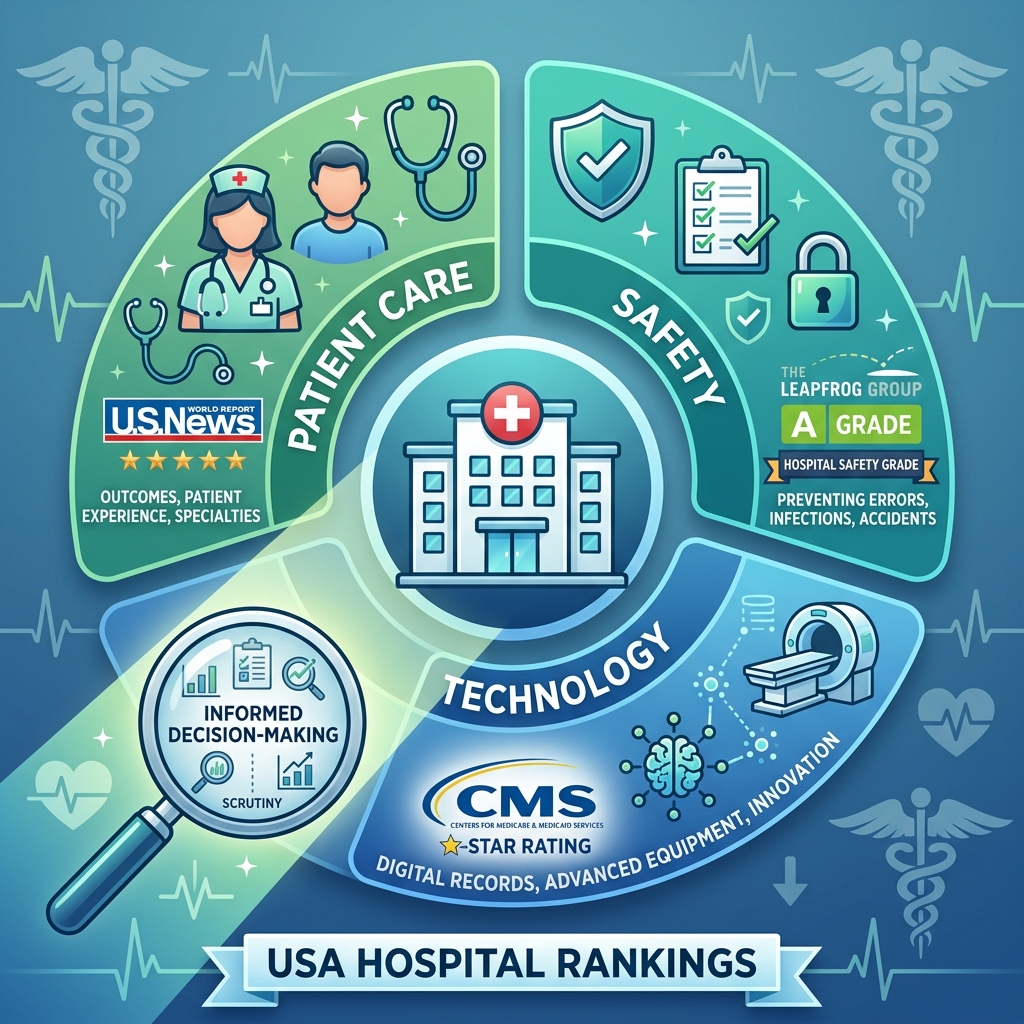
When it comes to your health or the health of a loved one, choosing the right hospital is one of the most critical decisions you will ever make. But with thousands of medical centers across the United States, figuring out where to go for the best care can feel overwhelming. This is where hospital rankings come in.
Hospital rankings are designed to help patients navigate the complex healthcare system by evaluating facilities based on various quality measures. However, not all ranking systems are created equal, and understanding what these lists actually measure is crucial. A hospital that excels in cancer treatment might not be the best choice for a routine surgery or emergency care.
This post breaks down the major hospital ranking systems in the United States, explains the key factors they evaluate, and provides actionable advice on how to use these tools to make informed healthcare decisions.
Key Ranking Systems in the USA
Several organizations publish annual hospital rankings, each using different methodologies and focusing on different aspects of care. Understanding the nuances of these major systems will help you evaluate which one is most relevant to your needs.
U.S. News & World Report Best Hospitals
Perhaps the most famous of all, the U.S. News & World Report rankings are highly anticipated each year by both hospitals and patients.
Methodology and Categories
This system evaluates over 4,500 hospitals across 15 adult specialties, from cardiology to neurology. The methodology relies heavily on objective measures such as survival rates, patient experience, volume of high-risk patients, and nursing quality. It also includes an “Honor Roll” of hospitals that achieve high scores across multiple specialties.
Interpreting the Rankings
While landing on the Honor Roll is prestigious, it is important to look at the specific specialty rankings. If you need a knee replacement, a hospital’s overall national ranking matters less than its specific score and rating for orthopedic surgery.
Leapfrog Group Hospital Safety Grades
The Leapfrog Group focuses specifically on one crucial element of healthcare: keeping patients safe from preventable harm.
Focus on Patient Safety
Leapfrog issues an “A” through “F” letter grade to hospitals. This system strictly measures a hospital’s ability to protect patients from preventable errors, injuries, accidents, and infections.
How Grades Are Determined
The grades are calculated using national performance measures from the Centers for Medicare & Medicaid Services (CMS), the Leapfrog Hospital Survey, and other supplementary data sources. If avoiding hospital-acquired infections or surgical errors is your top priority, this is the ranking system to consult.
Healthgrades
Healthgrades evaluates hospital performance based exclusively on clinical outcomes.
Quality and Patient Outcomes
Unlike some systems that factor in a hospital’s reputation among doctors, Healthgrades focuses purely on what actually happens to patients. They analyze Medicare data to track mortality and complication rates for various conditions and procedures.
Awards and Recognitions
Healthgrades awards hospitals with the “America’s Best Hospitals” designation (Top 50, 100, and 250), as well as Specialty Excellence Awards. Their data-driven approach offers a clear view of where a patient is statistically most likely to have a successful clinical outcome.
CMS Hospital Compare
Run by the federal government, the CMS Care Compare website is a highly reliable and transparent tool for patients.
Government Data and Star Ratings
CMS assigns hospitals a rating from one to five stars. This rating summarizes a variety of quality measures across five areas: mortality, safety of care, readmission, patient experience, and timely and effective care.
Data Transparency
Because this data comes directly from Medicare reporting, it is incredibly comprehensive. It provides an unbiased baseline to compare hospitals in your immediate geographic area based on strict federal standards.
Factors Considered in Hospital Rankings
To effectively use these rankings, you need to know what data the agencies are actually looking at. Most ranking systems weigh three primary categories of data.
Patient Outcomes
Outcomes are the most critical indicator of a hospital’s quality. This measures the actual results of the care provided.
Mortality Rates
This tracks the percentage of patients who die within a certain period (usually 30 days) after being admitted for a specific condition or procedure. Lower mortality rates generally indicate superior medical care.
Readmission Rates
If a patient is discharged and then has to be readmitted to the hospital within 30 days, it often signals that the initial treatment was incomplete or that discharge planning was poor.
Infection Rates
Hospitals monitor rates of specific healthcare-associated infections, such as MRSA or catheter-associated urinary tract infections. High infection rates can be a red flag for poor hygiene protocols.
Patient Experience
Clinical outcomes are crucial, but how a patient feels during their stay also matters significantly.
HCAHPS Scores
The Hospital Consumer Assessment of Healthcare Providers and Systems (HCAHPS) is a standardized survey given to patients after discharge. It asks about their experience with the facility.
Communication and Responsiveness
The HCAHPS survey covers critical touchpoints, including how well doctors and nurses communicated, how quickly staff responded to call buttons, and how effectively pain was managed. High scores indicate a patient-centered hospital culture.
Hospital Structure and Process
This category evaluates the environment, resources, and systems a hospital has in place to deliver care.
Staffing Ratios
The number of patients assigned to each nurse is a massive determinant of care quality. Hospitals with lower patient-to-nurse ratios typically have better outcomes and higher patient satisfaction.
Technology and Facilities
Does the hospital have advanced diagnostic imaging? Do they use electronic prescribing systems to prevent medication errors? The presence of modern medical technology is a key structural metric.
Accreditation
Ranking systems often check if a hospital meets the rigorous standards set by accreditation bodies like The Joint Commission, which evaluates overall hospital quality and safety.
Specialties and Procedures
Different hospitals excel at different things. A general hospital might be fantastic for treating pneumonia but lack the advanced technology needed for complex neurosurgery.
Specific Departmental Rankings
Always look at departmental rankings relevant to your condition. A hospital might rank #1 in the state for oncology but #50 for cardiology.
High-Volume vs. High-Quality
Studies consistently show that hospitals and surgeons performing a high volume of a specific procedure tend to have better outcomes. Practice makes perfect, and rankings often reward facilities that frequently perform complex surgeries safely.
How to Use Rankings to Choose a Hospital
Having all this data is only helpful if you know how to apply it to your personal situation. Here is a step-by-step approach to using hospital rankings effectively.
Identify Your Needs
Start by clearly defining what you need from a healthcare facility.
Specific Condition or Procedure
Are you giving birth, managing chronic heart failure, or scheduling a hip replacement? Your condition dictates which specialty rankings and outcome metrics you should prioritize.
Location and Insurance
Even the highest-ranked hospital in the country is useless if it is out of your insurance network or completely inaccessible. Always filter top-ranked hospitals through your health plan’s provider directory and consider travel logistics for ongoing treatments.
Look Beyond the Top 10
The most famous hospitals often dominate the national headlines, but they might not be the most practical choice.
Regional and Local Hospitals
Many ranking systems, like U.S. News, provide state and regional rankings. A highly-rated community hospital near your home might offer excellent care for common procedures without the logistical hurdles of traveling to a major medical center.
Specialized Centers
For certain rare or complex conditions, smaller boutique facilities or specialized centers (like dedicated orthopedic or cancer hospitals) might offer better, more focused care than massive general hospitals.
Consider Multiple Sources
No single ranking system paints a complete picture.
Cross-Referencing Rankings
If a hospital receives five stars from CMS, an “A” from Leapfrog, and ranks highly in Healthgrades for your procedure, you can be highly confident in its quality. If the rankings wildly conflict, you may need to dig deeper into the specific metrics pulling a score down.
Reading Patient Reviews
While clinical data is paramount, reading patient reviews can provide context about the bedside manner of the staff, the quality of the food, and the ease of navigating the facility.
Consult Your Doctor
Data is helpful, but it cannot replace professional medical advice.
Physician Expertise and Referrals
Your primary care physician or specialist has insider knowledge of the local healthcare landscape. Ask them where they would send their own family members for the procedure you need.
Discussing Hospital Affiliations
Keep in mind that your surgeon only operates at hospitals where they have admitting privileges. If you choose a specific highly-ranked hospital, you must also ensure you find a qualified surgeon who practices there.
Limitations and Criticisms of Hospital Rankings
While valuable, hospital rankings are not perfect. It is important to view them with a critical eye and understand their inherent limitations.
Data Lag and Inconsistencies
The data used to compile these rankings is often one to two years old by the time the list is published. A hospital that recently revamped its safety protocols might still show poor scores from previous years.
Gaming the System
Critics argue that some hospitals focus their resources primarily on improving the specific metrics used by ranking agencies, sometimes at the expense of other unmeasured areas of patient care.
Focus on Acute Care
Rankings primarily measure the success of acute, inpatient interventions (like surgeries). They are often less helpful for evaluating a hospital’s ability to manage chronic diseases, mental health crises, or outpatient care.
Patient Mix and Complexity
Hospitals in low-income areas or large academic medical centers often take on the most complex, high-risk patients. These patients inherently have higher complication and mortality rates. While some ranking methodologies try to adjust for patient risk, critics argue that safety-net hospitals are often unfairly penalized in the rankings for treating the sickest populations.
The Future of Hospital Rankings
As healthcare data becomes more sophisticated, hospital rankings will continue to evolve to provide more accurate and personalized information.
Emerging Metrics
Future rankings will likely incorporate more metrics related to health equity, assessing how well hospitals close care gaps between different racial and socioeconomic groups. We may also see increased tracking of telemedicine quality and outpatient surgical outcomes.
Personalized Recommendations
With the integration of artificial intelligence, ranking platforms may soon allow patients to input their exact age, comorbidities, and required procedures to generate a highly personalized list of the best hospitals for their specific risk profile.
Greater Transparency
As consumer demand for healthcare transparency grows, hospitals will face increasing pressure to provide real-time, easily digestible data on their clinical outcomes and pricing, making it easier than ever for patients to make informed choices.
Taking Control of Your Healthcare Journey
Hospital rankings are powerful tools that translate complex medical data into accessible consumer information. By understanding the differences between systems like U.S. News & World Report, Leapfrog, Healthgrades, and CMS Compare, you can look past a hospital’s marketing materials and evaluate its true clinical performance.
Always remember to cross-reference multiple ranking systems, prioritize the metrics most relevant to your specific medical needs, and discuss your findings with your doctor. Armed with this information, you can confidently choose the hospital that will provide the safest, highest-quality care for you and your family.